

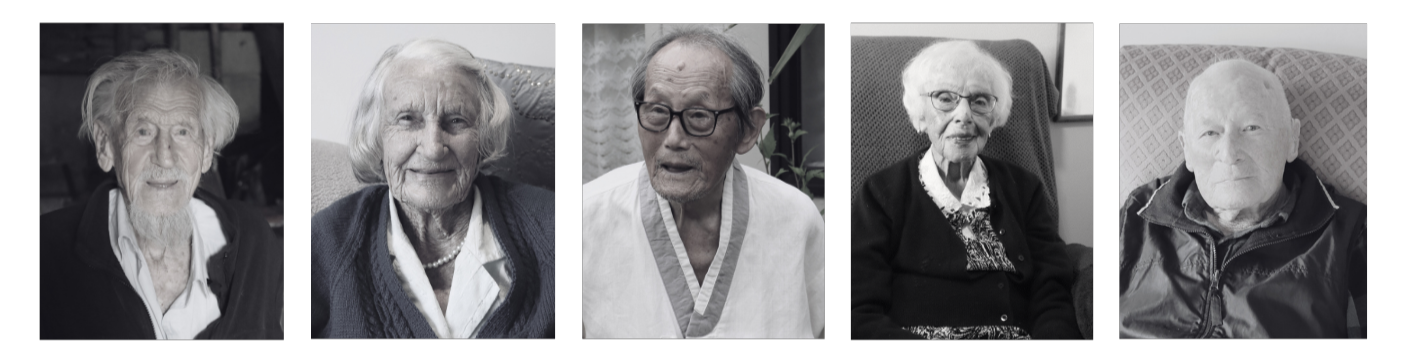

Why this project matters
This project is about more than history — it’s about connection, understanding, and valuing the people who came before us.
Through Century of Stories, we aim to:
- Preserve and share the rich history of Kiwi centenarians
- Celebrate our past through deeply personal narratives
- Strengthen connections between generations and communities
- Advocate for older people, highlighting their ongoing value in our society
A legacy for all generations
Each story offers a window into a century of change — from world events to everyday life in Aotearoa. These are stories of resilience, humour, hardship, love and contribution.
By sharing them through print, audio and visual formats, we are creating a lasting legacy that honours the wisdom, experience and lessons of our older generation, and ensures their voices continue to inspire long into the future.
About the author
Lorna Jane Harvey is an experienced writer and editor who has previously published and contributed to works that explore identity and biography, such as Somewhere: Women’s Stories of Migration, foreword by Rt Hon. Helen Clark (Beatnik Publishing in New Zealand and Europe, TouchWood Editions in North America) beatnikpublishing.com/collections/lorna-jane-harvey.
Through her work with Age Concern Wellington Region, Lorna has interviewed many seniors and volunteers, and written articles, blog posts, and other marketing and communications materials (examples in www.acwellington.org.nz/our-magazine/)
Lorna has a Bachelor of Fine Arts in Creative Writing from the University of Victoria (Canada), and a Masters in Communication and Applied Linguistics from the University of Neuchatel (Switzerland). With a strong understanding of narrative voice and structure, she’s skilled in translating spoken accounts into polished, engaging stories while staying true to the voice and intent of the subjects.
The exhibition
Alongside the book, we are creating an interactive touring exhibition sharing the stories of these centenarians. By bringing these stories into public spaces in a visual and engaging way, we aim to shift perceptions of ageing – from decline and invisibility to richness, resilience, and deep human value.
This exhibition seeks to:
- Celebrate and honour seniors as integral members of our community
- Encourage respect, appreciation, and care for older people
- Foster intergenerational connection, helping younger people learn from and relate to those in later life
- Prompt reflection on what it means to live a meaningful life, including the role of relationships and community
At its heart, the exhibition is about restoring visibility and voice to older people. It creates space for their stories to be heard, their experiences to be valued, and their lives to be seen as worthy of honour.

You can help
Make a gift to help bring this special 50th anniversary project to life.
Your support will help us capture these extraordinary stories, honour the lives of our oldest New Zealanders, and ensure their voices are heard for generations to come.
 At Dowling’s Progressive Engineering, he made parts for guns and ammunition. The work was repetitive: “moving levers mostly”. But it was welcome work. The wages were 14 shillings and sixpence, he recalls, probably enough to buy a pair of shoes nowadays. Then came September 3, 1939. “I was sitting on the back step, Sunday morning. Mr Chamberlain’s voice came on the radio: ‘I must tell you we are now at war with Nazi Germany.’ I was 16, nearly 17.”
The Blitz started gouging the city around that time. John recalls receiving the bombs before he helped to deliver them.
The stories start to flow a little better. John says: “Memories are starting to creep back in, even now.”
Since he was working on making weapons, he wouldn’t be called to go to war and was classed as being a “Reserved Occupation.” The monotony of the work grew and, with his friend Billy Campbell, he resolved to “do some real war work.”
“I first went to the Army Recruiting Office in Romford with Billy. They measured us and examined us.” Billy was taken, but John was turned down as he had flat feet. Across the street, there was an RAF recruiting office, so he gave them a go.
“What do you do, son?” the RAF Officer asked. John replied he was an engineer. “Very good, we need engineers in the Air Force.” But as they were desperately short of aircrew, he added: “You don’t want to fly, do you?” It was 1941. People were getting knocked out of the sky by the hundreds. He was given a quick medical examination, and a promise to be called. A month later, he was given his number, and in April of 1942 he was called up. He was 18 years old.
Basic training began in Stratford-upon-Avon, where they learned about aviation and things like finding their way in the dark. Then they were sent to Heaton Park in Manchester. There were thousands of people training. Some were chosen to be aircrew navigators, gunners, pilots. Everyone wanted to be a fighter pilot.
“We did a ten-hour grading course on Tiger Moths, and I didn’t know how I’d come out of that one because I didn’t think I’d do too well, but apparently they must have thought it was sufficient to carry me on to pilot training.”
You will be able to read more of John’s story in Century of Stories when it is published.
 When Neville was five, he walked a mile and a quarter each day to school at Pohokura near Stratford. It was a one-room school, not much bigger than an average living room. The teacher, a young woman, taught every class together and boarded in Neville’s home.
On the way home from school, there was a pond as big as a house. The older kids had made a slide down its bank. They’d sit on one foot and balance themselves with the other leg stretched out in front. Down they’d go, and they’d stop where a heel-shaped hole halted the slide. Then they’d run back up and go again. Neville was persuaded to try. He was only little, but he was confident.
“I did alright until I got to the bottom. But when I stopped, I stopped so suddenly that I went over into the water!” Neville recalls. None of the children could swim, and Neville began to sink. The only girl who could swim was a little older and she was getting dressed in the long grass nearby. She came tearing down and jumped into the water with practically no clothes on at all and saved Neville from drowning. The children laughed, and Neville still laughs as he remembers the moment.
Behind the farm lay thick bush. Neville often wandered through it with Earle, his older brother. At night, wild pigs came out. George and Murray, the eldest, would go after them. George would get Murray, the eldest, to hold the torch and George would try to shoot them. But he never actually managed to get one.
Then the Great Depression came. It swept through New Zealand like cold wind under a door. After only three years, the farm was lost. The family moved to Hāwera. “My father hung on to the farm when we left, but he had to get rid of it in the end. He just ran out of money.” Dairy prices collapsed, and unemployment rates grew rapidly. George went to work as a delivery driver for a coal merchant with an old truck, but he didn’t make much money from that so he had to sell the truck as well. “We lived at 35 Argile Street. I can remember it as plain as day. But if you asked me what day it is tomorrow, I wouldn’t be able to tell you,” Neville laughs.
Unemployment swallowed towns. There was very little work to be found anywhere, and Neville’s family, like many others, still needed feeding. It just seemed to be getting worse. George heard about some unemployment work offered by the government. This public works scheme was part of the Depression-era relief work. The work site was about 29 kilometres up Waitōtara Valley Road, so George rode his pushbike 55 kilometres south, and then another 29 up the muddy valley. Truckies would often stop and give him a ride down to Waitōtara. He wouldn’t get a ride up the valley though. The work was knapping great big stones in the shallow river. Crews of unemployed men had to break up the stones with sledgehammers, chisels and metal wedges, and load them into trucks. This relief labour was gruelling. The rocks would be used on road-building sites. The men would have formerly been skilled workers but were now broken by poverty. It paid poorly, but it paid.
George worked three-day stints, sometimes more when nearby farmers offered extra jobs. At home, Grace kept the house and waited, unsure whether the week’s groceries could be paid for.
You will be able to read more of Neville’s story in Century of Stories when it is published.
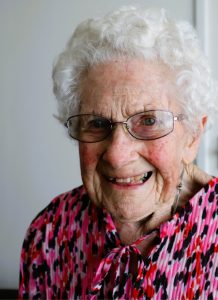 Hilda speaks in a voice that hovers just above a whisper – soft, endearing, with a faint burr at the edges, like the rasp of a match on coarse paper. There’s a very slight lisp, too, the kind that make her words shorten just enough to charm. She is very small, and her smile, smaller still, always waits at the corners of her mouth. She looks like she has just stepped out of some gentle dream. Life seems to please her quietly, perpetually.
The room is warm and Hilda slips off her cardigan. Her skin, pale and papery, leaves a trace – a delicate dusting – on the cushions, like the whisper of winter beneath a windowpane.
Hilda came into the world as the child of Eva and Robert Strong. In 1923, her parents had left England behind. Her Scottish father had been seriously affected by mustard gas during the Great War and carried the long shadow of the war in his lungs. The air of England was thick with fog and coal smoke, and unforgiving to damaged lungs. To stay was to die, slowly but surely.
They had set their sights on Australia, where his sisters awaited them. But the sea, indifferent to plans, had no ship sailing that way. Instead, there was one bound for New Zealand. So they took it, crossing oceans and arriving in Wellington aboard the Remuera.
You will be able to read more of Hilda’s story in Century of Stories when it is published.
 For decades, they lived in a four-bedroom house in Fielding. “We managed well,” Molly says, as though it were simply a matter of budgeting, and not the daily miracle of feeding, clothing, and raising eight human beings into adulthood.
Christmas was careful. No favourites, no jealousies. She was a great cook. Made puddings with sixpence coins hidden inside. “We tried so each person, when their pudding was cut, had the sixpence in it.”
Mary smiles at the memory. “When I came home from school and told Mum about the beautiful frocks some of the girls had, she made one for me. I was so lucky my mum could sew and make things.”
Quiet moments came only once the children were grown. But not all at once: “They went one at a time. I told them not to all stay together. I don’t know whether that was wise. But they all went in different directions and lived a life of their own.” Once a year, they still all gather in Palmerston North for a meal. “That’s about the only time,” she says. “I look forward to that.”
When the children were older, she returned to work at a fabric shop. A lovely job, she says, with beautiful materials. She worked there until the owner refused her a single afternoon off to prepare for a daughter’s wedding. So she never went back. “He lost the business eventually I think. It was a shame really.”
Her advice for young people is practical and unvarnished. “Bring them up the best you can. If you’ve had a good life, follow it. People that are no good, people who take advantage of others, are of very little use to the world. And of no use to themselves.”
“I’m sure I don’t know the secret to long life,” she says. “Only the Lord can tell you that. I just enjoy life. Whatever comes your way, you’re given the choice to enjoy it or not. And I think you should enjoy it the best you can. Some people have a miserable life. Depending on where they live, you know. But I live here now. It’s a really pleasant place to be.”
You will be able to read more of Molly’s story in Century of Stories when it is published.
 “Thump. A bomb dropped. It didn’t go off. We stopped singing.”
Life in London during the war was precarious. Stan Welch lived about 12 miles out of the city, and like thousands of Londoners, had to negotiate bombed out ruins and not knowing whether trains and buses would be running. Getting to work was a daily adventure.
On this particular day, everyone had been singing on the train when the bomb dropped close by. Too close.
As London increasingly felt the effects of war, it was normal for Stan to have to navigate around the streets of London as if it were a life-threatening obstacle course with constant detours caused by barriers with three letters on them; UXB – unexploded bomb. One morning he went for a wander around St Paul’s Cathedral. The night before there had been more bombing, and “every building around the church had been wiped out”. It’s now war-legend how lucky Londoners were that St Paul’s miraculously survived night after night of relentless German bombing raids. St Paul’s became a beacon of hope and a symbol of resilience for them in what proved to be the most unthinkable of circumstances.
Stan became restless as the war continued to encroach on his life and really wanted to join his eldest brother in the great war adventure. He was called up by the Royal Navy not long after turning 18. He was put on a train to Skegness where he would undertake six months’ training at boot camp.
‘Our true intent is for your enjoyment’. The irony of the holiday camp sign that was still up on their arrival makes Stan chuckle. Boot camp was the usual rifle drills and learning to march in step.
“No heating in the little cabins. In January! It was very cold.” It was here he learned many of the different codes he’d be using.
“One was called a “One Time Pad”, which was only used for one day, then you screwed it up and threw it away. And when we used to go out and lay mines off the French coast, we had to take all the codes ashore, and they were giving you different codes in a bag, which had lead in them. So, if the ship sunk, you’d just toss it over the side, and it sank.”
Once fully trained as a Telegraphist, Stan was sent to Newcastle where he joined a brand-new minelaying ship, the HMS Apollo, which was sent to Milfordhaven in Wales where they picked up their first load of mines. They left that same evening and began laying mines off the coast of Cherbourg-en-Cotentin in France. Stan remembers the nervousness of the men, as they read the papers about the massive defences the Germans had built along the coast. A special church service was held on deck the night they departed in which ‘Drakes Prayer” was read.
Disturb us, Lord, to dare more boldly,
To venture on wider seas
Where storms will show Thy mastery;
Where losing sight of land,
We shall find the stars.
We ask You to push back
The horizons of our hopes;
And to push into the future
In strength, courage, hope, and love.
They began laying mines all along the French coast in preparation for what would become the largest seaborne invasion in history, the Normandy Landings. In all, Stan reckons they laid about 8,500 mines during his time on the Apollo, including the Norwegian coast, the North Sea, around Britain and even the Kola Bay up in North Russia.
You will be able to read more of Stan’s story in Century of Stories when it is published.
 In 1932, there was an earthquake in Karachi. It had a magnitude of 5.9, but it was felt 1,200 kilometres away in Kashmir. By the standards of geography, the epicentre belonged somewhere else entirely. Yet distance proved to be a poor measure of its reach. The event marked Anand and it’s the first thing he can remember. “My father was sitting outside on the lawn, shaving. Suddenly, the water turned over. My father tried to explain to me what an earthquake is, but I was only four years old.”
Anand Pande was born on Muir Road in Allahabad, in British India. The city is now known as Prayagraj since the 200-year period of British colonialism ended in 1947. The area contains massive agricultural expanses between the Himalayas and the Ganges basin, and the city of Allahabad lies where the three rivers meet. The confluence of the rivers is said to be sacred. The Ganges, the Yamuna, and the invisible and mystical Saraswati rivers meet there.
“I’m a Hindu. My family are Brahmin. That is the top of the Hindus in the old caste system.” There were Brahmins, who were usually priests or teachers, Kshatriyas who were kings and rulers, Vaishyas who were merchants and farmers, Shudras who were labourers, and Dalits who were sometimes known as the untouchables. “In our family, there were many teachers. But this is all now theoretical because in the new India, it doesn’t quite work that way. After independence, that all changed.”
At school, Anand and his siblings were taught in Hindi. But at home they spoke a mix of English and Hindi. “Hinglish, you might say,” Anand says lightly.
“I had a teacher I really liked when I was 11. He taught geography. He had maps all over and asked many questions. Teachers make a lot of difference.” When young Anand looked at those maps, he probably didn’t imagine he’d end up living in New Zealand one day.
“I saw Gandhi many times. As far as I’m concerned, non-violence is the way to go. India won independence through non-violence. Gandhi used to have a prayer meeting in the evening, in Bombay. He would have prayers from each district: Christians, Hindus, and Muslims. I was in Bombay when he was shot. An extremist Hindu shot him, and everything got shut down. I was watching a movie in Metro Cinema when it happened, and I had been there with Gandhi just the day before.”
You will be able to read more of Anand’s story in Century of Stories when it is published.